Custom Embroidery in Oklahoma City
Embroidery is thread sewn straight into the garment, worked from a digitized stitch file that tells the machine where every needle drop goes. It sits proud of the fabric, catches the light, and does not crack, fade or peel the way a print eventually will. It is the finish people associate with a uniform that cost something.
Not sure it is the right method for what you have in mind? Compare all three methods and we will tell you which one your job wants.
Updated
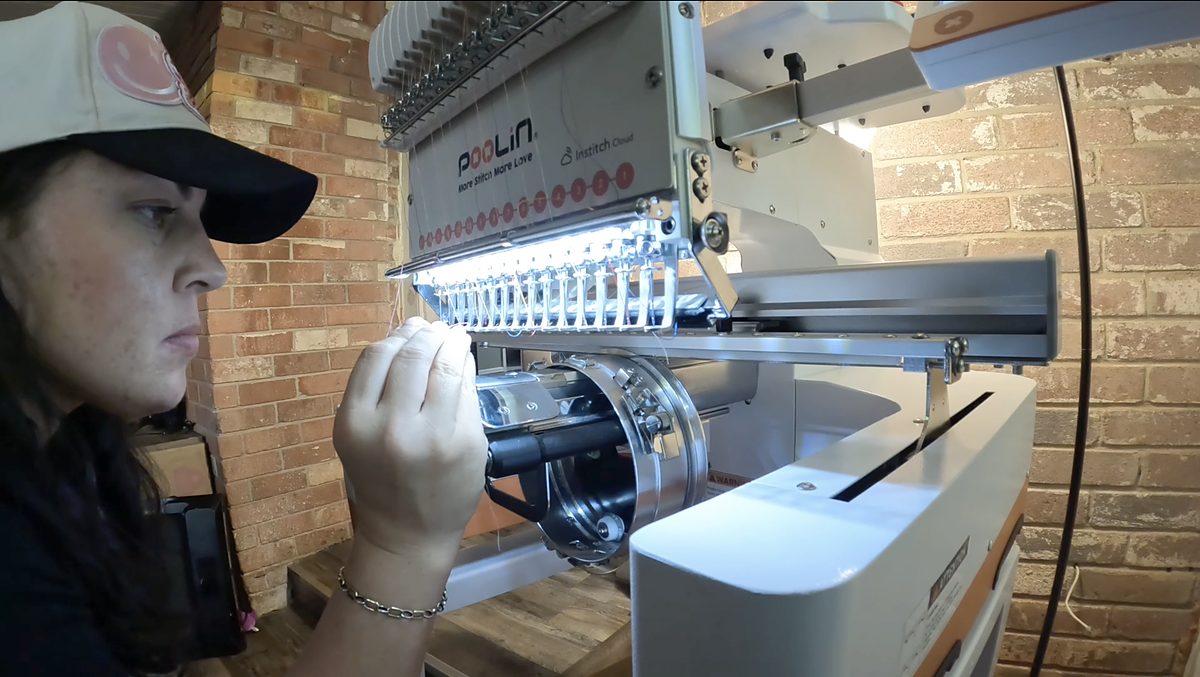


It is the right call when
- Caps and headwear. A structured crown holds a stitch the way thin cotton never will, and a cap is the piece most people come here for first.
- Polos and work uniform. A left-chest logo on a polo is the job embroidery was made for: small, repeatable, and worn every day.
- Jackets and outerwear. Heavy fabric takes a dense stitch without distorting, and the piece outlives several seasons of wearing.
- Bags, totes and backpacks. Monograms, names and single initials, on a surface that gets dragged around and does not get babied.
- A set you want again next season. The digitized file stays on record, so the reorder is a message rather than a project.
Working the other way round? If your artwork is full color or photographic, a DTF transfer may suit it better. If the idea is a saying or a symbol rather than a logo, it may want a patch.
Worth knowing
Artwork has to be digitized before it can be embroidered. Digitizing converts your file into a stitch path - the order the needle travels, the direction each area is filled, where it underlays and where it stops - and it is a one-time step per design rather than something you pay for on every reorder. It is also the step that decides whether the finished piece looks right. Very fine detail and very small text do not survive being sewn: thread has a physical width, and below a certain size the letters close up and read as a smudge on the cap rather than as words. A gradient cannot be stitched either, only approximated in blocks of thread. So we look at your artwork before anything runs, and we will tell you honestly if something needs simplifying to work at the size you want it. That conversation happens before you pay, not after you open the box.
What to send us
Embroidery is the method that cares most about what you send, because the file has to survive being turned into stitches.
A vector file
.pdf or .svg. Lines stay sharp at any size, which is what lets a logo be scaled down to a cap front without guessing. Working in .ai or .eps? Zip it first and the form will take it.
A large PNG or JPG
The bigger the better. If it is the logo lifted from your website it is probably too small to digitize cleanly - check with us first rather than after.
A photo of the old shirt
Plenty of embroidery jobs start as a picture of a piece you already own and want matched. Send it and we will work from there.
Say what you want
A name, an initial, a line of script. Describe it. We would rather talk it through than have you give up on the form.
How an embroidery job runs
1. You send the piece and the artwork
Either the garment you already own, or the blank you want us to bring - plus whatever file you have, in whatever state it is in.
2. We quote it
A real number for your piece, from the person who is about to make it, priced to your artwork and your quantity, not a calculator.

3. The artwork gets digitized
This is where we tell you if anything needs simplifying, and where size and placement get settled.
4. You approve the mock
The number is confirmed once you approve the final mock, and nothing is sewn before you have seen it.
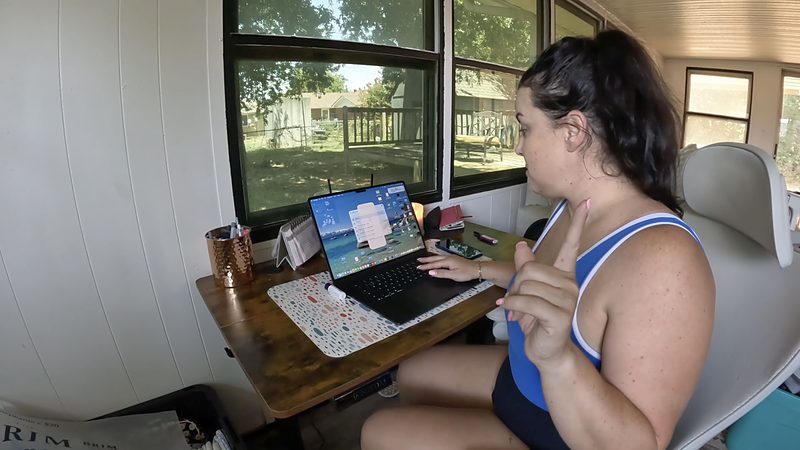
5. It gets made, by hand, here
In Oklahoma City, by Stephanie, on her own machine.
6. The file is kept
Your digitized file stays on record, so a reorder is a message rather than a project.
Questions people ask first about embroidery
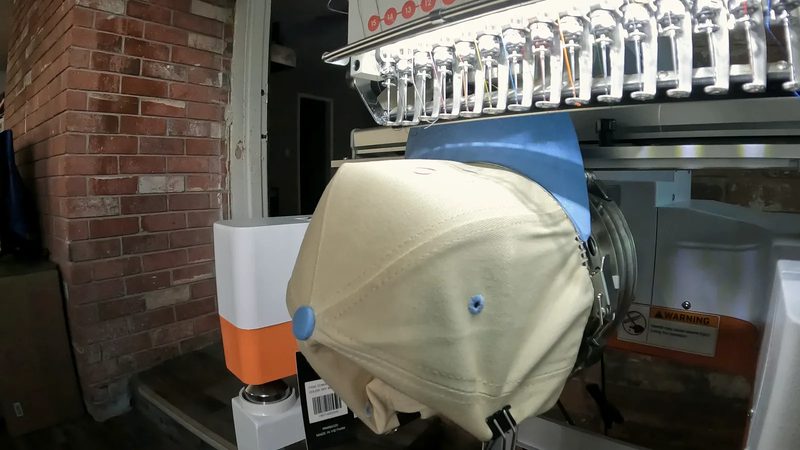
Will my logo work on a cap?
Usually, and the thing that decides it is not the logo, it is the smallest element in it. A cap front is a small, curved, structured panel, so a wordmark with hairline strokes or a registered-trademark symbol at the corner will close up in thread. Send it and we will look before you commit to anything - if it needs simplifying we will show you what that means.
What is digitizing, and do I pay for it?
Digitizing is the step that turns your artwork into a stitch file the machine can read. It records the order the needle travels, the direction each area gets filled, where it underlays and where it stops, and it happens once per design rather than every time you reorder. It is also the step that decides whether the finished piece looks right, because thread has a physical width. Hairline strokes close up, very small text reads as a smudge on a cap rather than as words, and a gradient can only be approximated in blocks of thread rather than reproduced. So we look at your file before anything runs and tell you honestly if something needs simplifying to work at the size you asked for. That conversation happens before you pay, not after you open the box. Digitizing is free on designs we will run again. One-off personalized pieces carry a small setup fee, quoted before anything runs.
Embroidery or a DTF transfer for a full-front design?
A full-front design is usually a transfer. Large artwork in thread means a lot of thread, which stiffens a thin cotton tee and can pull it out of shape, and full-color or photographic artwork cannot be reproduced in stitches at all. Embroidery is for the logo, the name and the left chest. DTF transfers are for the big graphic.
Can you embroider a piece I already own?
Yes, and plenty of jobs are exactly that. Bring the jacket, the blanket, the bag or the backpack you already have, or send a photo of it if bringing it in is awkward. Tell us where you want the design to sit and we will tell you whether the fabric and the seam allow it before anything goes near a hoop. Some pieces cannot take a hoop where you want them: a lining sewn shut, a seam running straight through the design area, or a fabric that puckers when the thread pulls it tight. We spot those before we start, so you keep the piece if the method will not work on it.
Got something in mind? Let's make it yours.
Send a patch, a photo, or just tell us the vibe. If it's a rough idea, even better. We'll figure it out together.